Welcome to My Kitchen: Hamburger with Sweet Potato Fries — An In-Depth Conversation


Welcome to my blog! You might be surprised that my very first post isn't a dish that hails from Italy. The truth is, I am just as passionate about American food as I am about Italian cuisine. At its core, American food is wonderfully simple: chocolate chip cookies, apple pie, turkey, mashed potatoes, and the list goes on.
While you can certainly find complex dishes in both cultures, I believe that true flavor enjoyment comes from simple meals made with superior ingredients and prepared with excellence. Less is more. You will hear me repeat that phrase constantly on this website and in my upcoming book series.
The food on this blog represents the everyday meals I prepare for myself. It is pretty much my personal diet. I do my best to cook with whole foods—meaning non-processed ingredients with no additives or chemical names you can't pronounce.
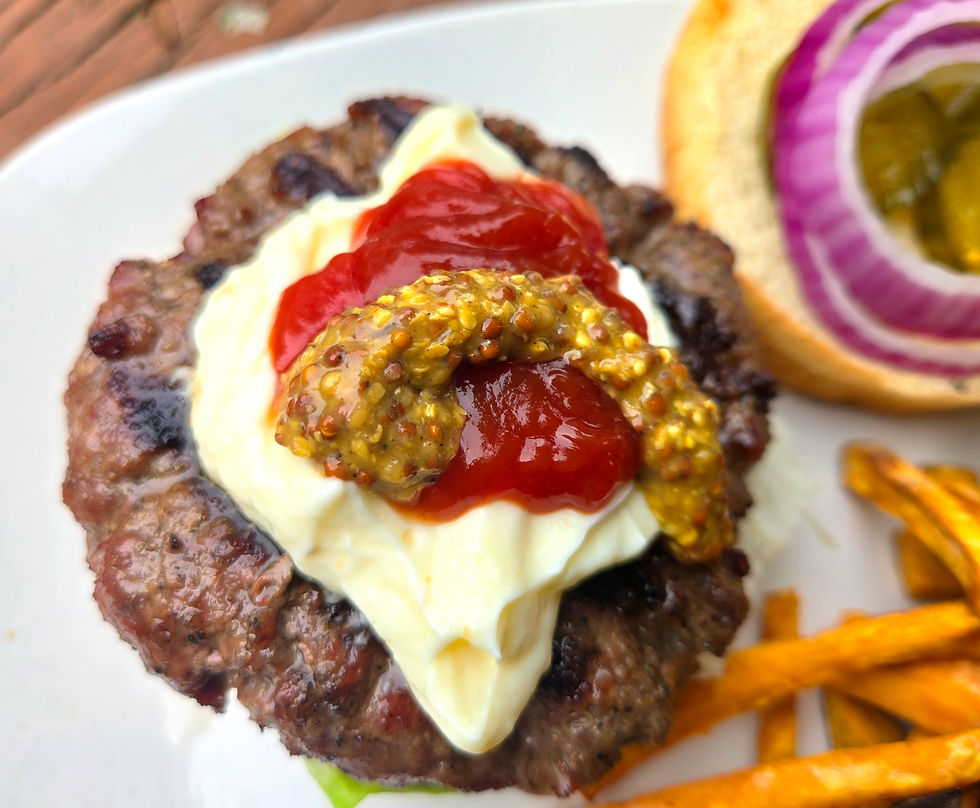
Now, you will notice occasional exceptions. Pictured above is a hamburger topped with classic condiments on a toasted bun, served alongside sweet potato fries. I consider this one of my "fun meals." The bread and condiments fall into the processed category, but I don't consider these terrible choices—especially when the main components are wholesome, like fresh sweet potatoes and 100% ground chuck. Normally, I would bake my own hamburger rolls using just a few basic ingredients, but here I used Pepperidge Farm rolls, which are perfectly fine—especially when nicely toasted.
Now that I am an empty nester and living on my own, I have the luxury of taking my time to savor just about every moment of the day. The moments that mean the most to me involve preparing my meals. I cook with such love and attention to detail that it becomes more than just making dinner; it is a ritualistic experience that brings me immense joy.
When I choose to have a drink, pairing my food with the right wine bumps the experience up another notch. Though I am not ashamed to say that for a burger like this, I often prefer a classic Coke, a Pepsi, or perhaps a nice Beaujolais.
The Secret to the Beef
Let’s talk about this burger. First and foremost, the beef is 100% ground chuck. Notice I didn't say standard "ground beef." There is a massive difference in quality, taste, and texture.
When you buy generic ground beef at the supermarket, you are getting a blend of various trimmings from the cow. Marketing rules allow it to be called "beef," but it rarely compares to the signature burgers you get at a great pub. Most great burger joints use a pure blend or a single cut, like chuck steak—my personal favorite.
When you select a chuck steak with good marbling and grind it yourself (or ask your butcher to grind it for you), it cooks better, chars better, has a superior texture, and tastes vastly better than standard ground beef.
The Burger
Seasoning & Shaping
I find the ideal burger size is about 5.5 ounces. I prefer a thicker patty that can be cooked to medium—remaining juicy with a good exterior char and just a faint hint of pink in the middle. I love a rare steak, but rare ground chuck just isn't as appealing to me.
I season the meat with just a hint of sea salt, coarse black pepper, and an ever-so-faint dusting of garlic powder. When you bite into the burger, you should taste the rich, charred meat—not a overwhelming wall of spices. Some recipes throw everything including the kitchen sink into the meat. Perhaps people do that out of frustration with poor-quality grocery store beef, but nothing beats freshly ground chuck with just a touch of simple seasoning.
My Method:
Once seasoned, I roll the meat into a 5.5 oz meatball and let it rest in the fridge for a short time. This allows the seasonings to marry with the beef and helps bind it together.
When ready to cook, I take the meatball out and gently press it into a disc about 4 inches wide and an inch thick.
If the edges crack slightly while shaping, I simply cup my hands around the sides to push it back together. You can use a burger press, but I prefer the rustic, imperfect look of a hand-shaped patty.
How to Cook It
Everyone has an opinion here: Open flame? Skillet? Cast iron?
None is necessarily superior—they just offer different benefits. An open flame gives you a wonderful, smoky char. A flat top or skillet lets the burger sear in its own rendered fat.
Cast iron, however, gives you the best of both worlds. Once a cast-iron skillet is properly heated, it mimics the high heat and char of a grill while allowing the patty to cook in its own juices. (For the record, the burger pictured here was cooked over an open flame!)
The toppings and the bun
When you start using high-quality ground chuck, you naturally want to pull back on heavy toppings. My thought process is similar to making homemade pasta: when the pasta itself is delectable, you use a very simple sauce so you don't mask its quality. The same goes for a great burger. No bacon, no cheese, no mushrooms today—just simple, zesty, and sweet accents that let the beef shine through in every bite.
The Sauce: I have always loved the classic blend of mayonnaise, mustard, and ketchup (often called "special sauce"). However, I prefer not to pre-mix them. Spreading them separately creates distinct layers of flavor. Always use high-quality condiments, especially the mustard—I use a coarse country mustard for a more refined, elegant flavor.
The Crunch: Iceberg lettuce brings a cold, crisp texture. Higher-end greens have their place, but nothing beats classic iceberg on a burger.
The Zest: Red onion and bread-and-butter pickles add just the right amount of tang and sweet acidity to balance the richness of the beef.
The Bun: A toasted Pepperidge Farm standard hamburger bun does the job wonderfully.

Air-Fryer Sweet Potato "Fries"
Calling these "fries" isn't entirely accurate, as they aren't deep-fried. They are baked using an air fryer—which, let's be honest, is really just a compact convection oven. But using high-intensity convection heat in a small space produces spectacular results. My small Cosori air fryer takes up very little counter space and cooks small meals to perfection.
While deep-frying works wonderfully for Russet potatoes, I don't feel it does sweet potatoes justice. Sweet potatoes truly shine when sliced thin and baked with circulating heat. This process prompts caramelization and the Maillard reaction across the entire surface of every fry, bringing out a distinct, savory sweetness.
How to Prepare Them
Slice the sweet potatoes thinly.
Toss them in a mixing bowl with sea salt and a light drizzle of olive oil.
Air-fry (or bake in a convection oven) at high heat for about 30 minutes, tossing the basket every 10 minutes.
Tossing regularly is essential for even cooking. Slicing them thin increases the surface-area-to-interior ratio, making the natural sweetness off-the-charts good.
Making Everyday Meals Sacred
You can make a basic hamburger and fries... or you can make a Hamburger & Fries.
The goal of this blog is to encourage you to take simple, everyday meals and elevate them into something extraordinary. (My one regret for this post is that I didn't cut the burger in half to show you the juicy center—I will redeem myself in a future post!)
Treat your cooking as a daily ritual where time stands still, and the art of preparing and enjoying food becomes a sacred moment in your day. Stop and smell the roses.
See you in the next post!
"It is not that we have a short time to live, but that we waste a lot of it."— Seneca
Comments